Skip to content
Menu
021 494 9724Book a table
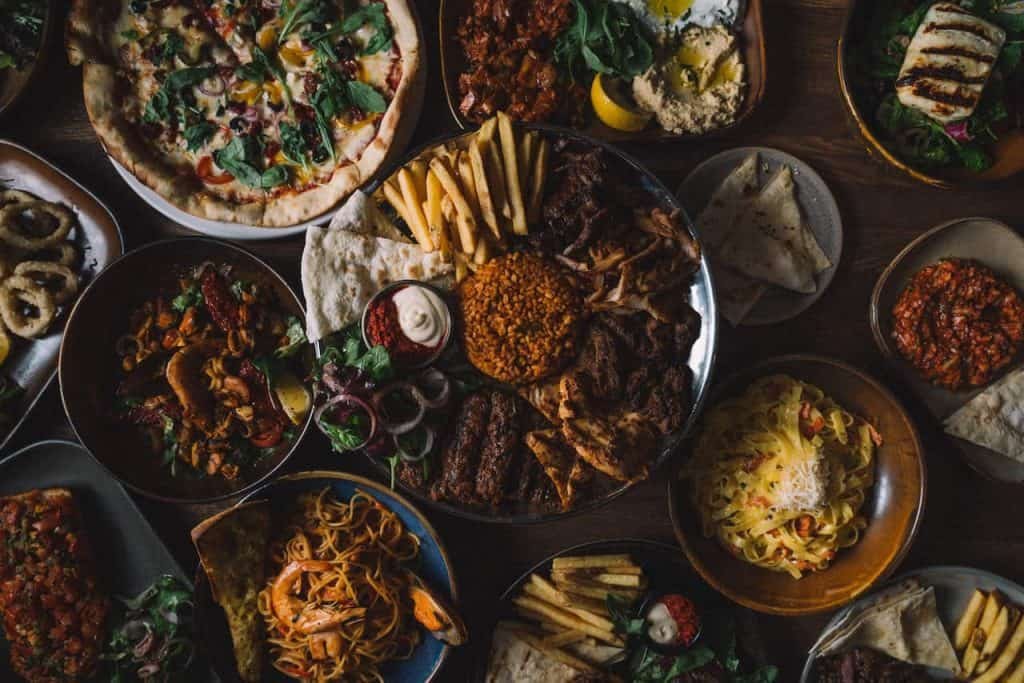
Mediterranean dishes on the table at Nosta
Mediterranean cuisine

Mediterranean cuisine: the dishes, ingredients and diet

What ties the cooking of the Mediterranean together, and seven dishes to know.
By Nosta RestaurantUpdated November 20267 min read

Mediterranean cuisine is the cooking of the countries around the Mediterranean Sea, from Spain, Italy and Greece to Turkey, Lebanon, Egypt and Morocco. Each has its own dishes, but they share a pantry of olive oil, fresh vegetables, pulses, grains, fish, herbs and a little meat, and a habit of eating together and taking time over it.

In this guide

What Mediterranean cuisine is

The Mediterranean has been a crossroads of trade for thousands of years. Greeks, Romans, Arabs, Venetians and Ottomans all carried ingredients and cooking methods around its shores, which is why the same dish can turn up in several countries under different names: stuffed vine leaves are dolma in Turkey and dolmades in Greece, and flatbreads, kebabs and pastries cross every border.

What ties it together is the climate and what grows in it. These are the foundations:

  • Olive oil for cooking, dressing and dipping
  • Vegetables such as tomatoes, aubergines, peppers, courgettes, onions and greens
  • Pulses and grains: chickpeas, lentils, beans, bulgur, couscous, rice and bread
  • Fish and seafood on the coasts, and lamb, chicken and goat inland
  • Yoghurt and cheese, such as feta, halloumi and white cheese
  • Herbs, lemon and garlic for flavour, more than heavy sauces

The Mediterranean diet

The “Mediterranean diet” describes the traditional way of eating in places such as Crete and southern Italy: plenty of vegetables, fruit, pulses, whole grains, nuts and olive oil, fish a few times a week, modest amounts of cheese and yoghurt, little red meat and sugar, and wine in moderation with meals. It has been widely studied for its benefits to heart health, and in 2010 UNESCO recognised it as part of the intangible cultural heritage of several Mediterranean countries.

It is less a diet than a way of eating: seasonal food, cooked simply and shared at the table.

Seven dishes to know

Pizza

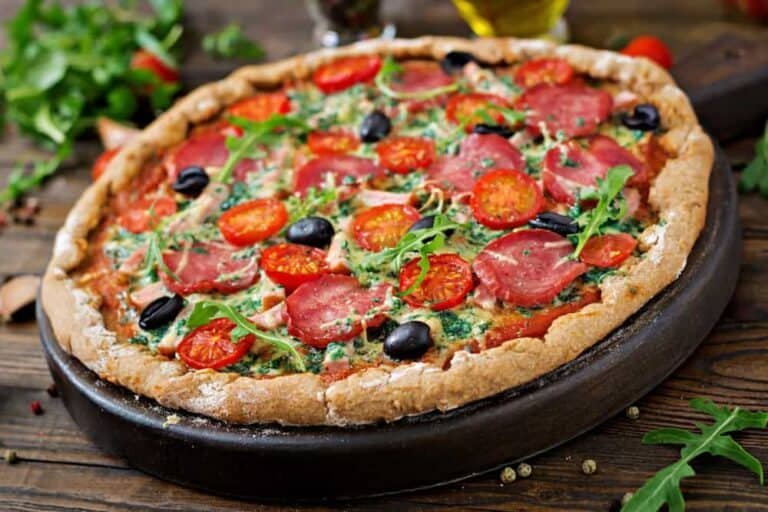
Mediterranean pizza at Nosta, Cork
Mediterranean pizza from the wood oven at Nosta

Pizza was born in Naples as cheap, quick food for working people and has become the best-known Mediterranean dish in the world. A Neapolitan-style pizza is simple: a thin base, tomato, mozzarella, olive oil and basil, baked in minutes in a very hot wood-fired oven. A “Mediterranean” pizza piles on the region’s vegetables and cheeses, such as olives, peppers, red onion, sundried tomatoes and goat’s cheese or feta. More in our story of pizza.
Moussaka

Greece and the Eastern Mediterranean
Baked
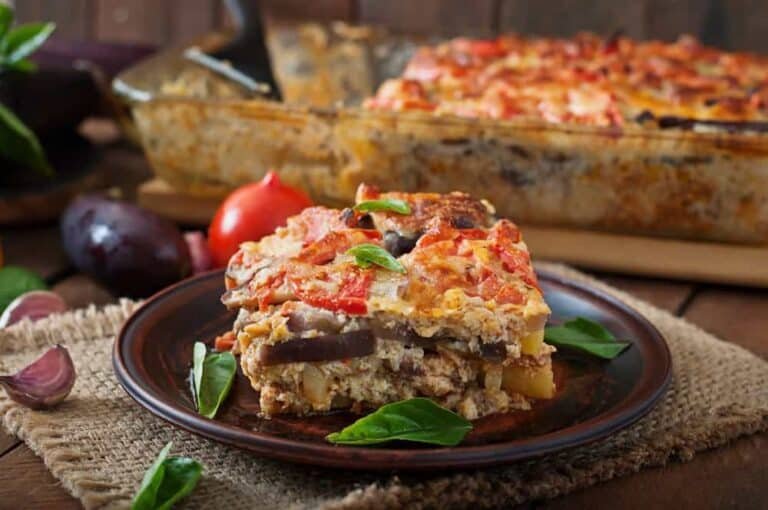
Greek moussaka
Moussaka, with its golden béchamel top

The Greek version is the one most people know: layers of fried or roasted aubergine (sometimes with potato) and a lamb or beef sauce spiced with cinnamon, topped with a thick layer of béchamel and baked until golden. Turkish musakka is a simpler stew of aubergine and minced meat without the béchamel. Read where moussaka comes from.
Falafel

Eastern Mediterranean
Vegetarian
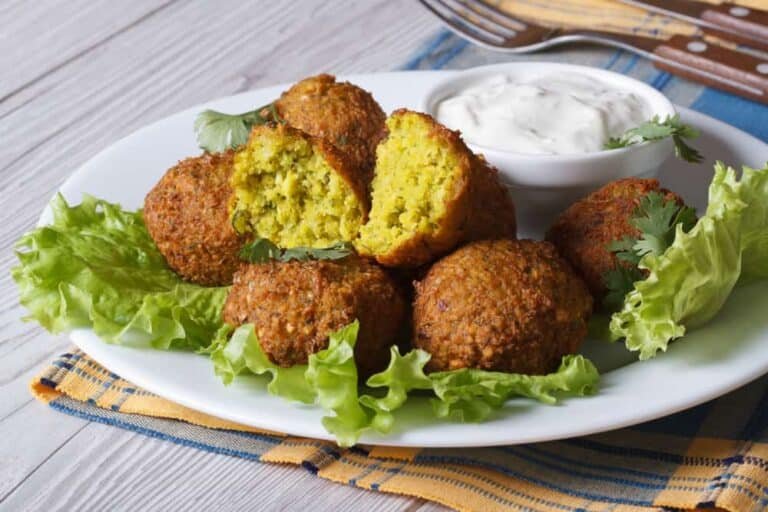
Falafel with salad
Falafel, crisp outside and green with herbs inside

Crisp, deep-fried balls of ground chickpeas, or fava beans in Egypt, mixed with herbs, onion, garlic and cumin. Falafel is served in pitta with salad and tahini sauce, or as part of a meze, and it is a favourite vegetarian street food from Cairo to Beirut. See our guide to falafel.
Couscous

North Africa
Grain
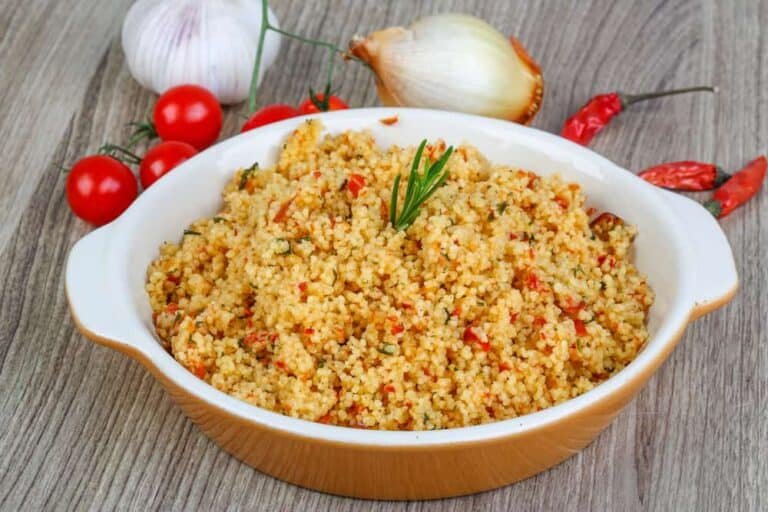
Couscous with vegetables

Tiny granules of durum wheat semolina, steamed until light and fluffy and served with a stew of vegetables, chickpeas, lamb or chicken. Couscous is the everyday staple of Morocco, Algeria and Tunisia. More in our guide to couscous.
Hummus

Eastern Mediterranean
Vegetarian dip
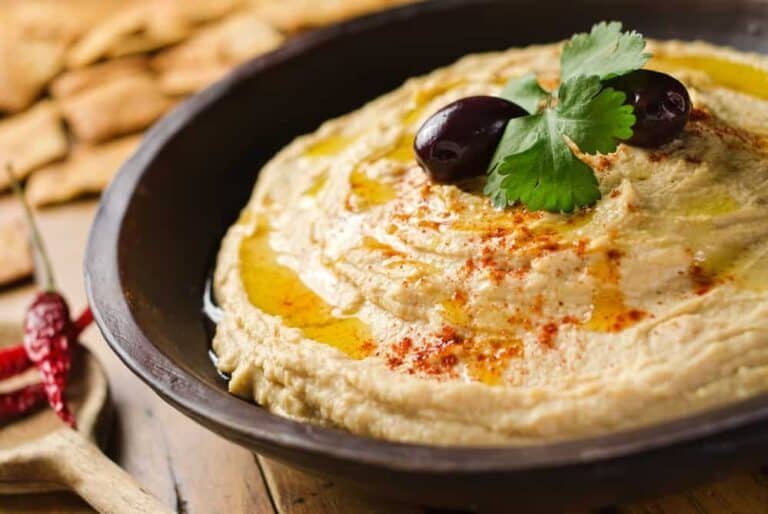
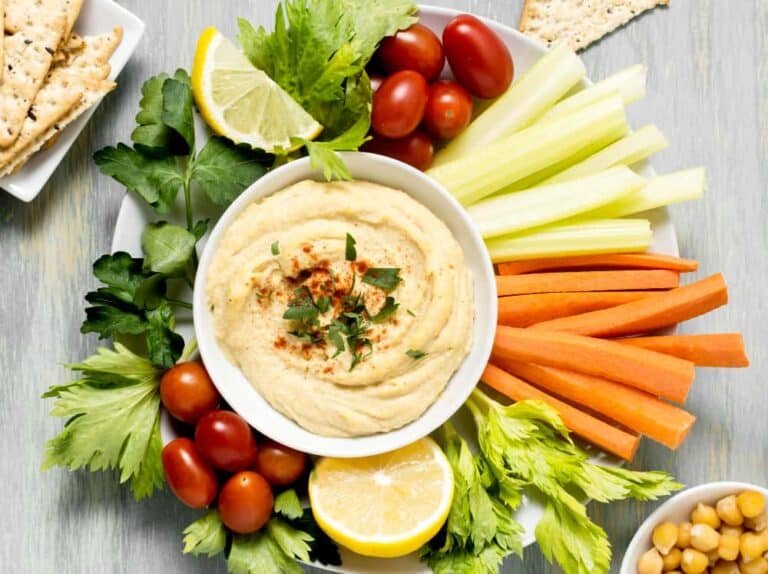
Hummus with olive oil
Hummus, finished with olive oil

Cooked chickpeas blended with tahini, lemon juice, garlic and olive oil until smooth and creamy, finished with a swirl of olive oil and paprika or sumac. Eat it with warm bread as part of a meze. Read our guide to hummus.
Dolma

Turkey, Greece and beyond
Stuffed vegetables
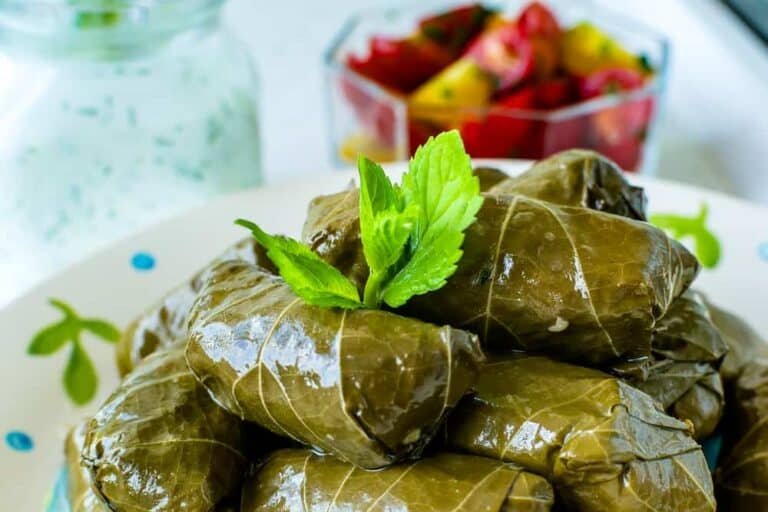
Dolma, stuffed vine leaves

Dolma means “stuffed”. Vine leaves are rolled around rice, herbs and sometimes minced meat and simmered in a lemony broth; peppers, courgettes and tomatoes are filled the same way. The meat-free version is usually served cold with olive oil. See our guide to dolma.
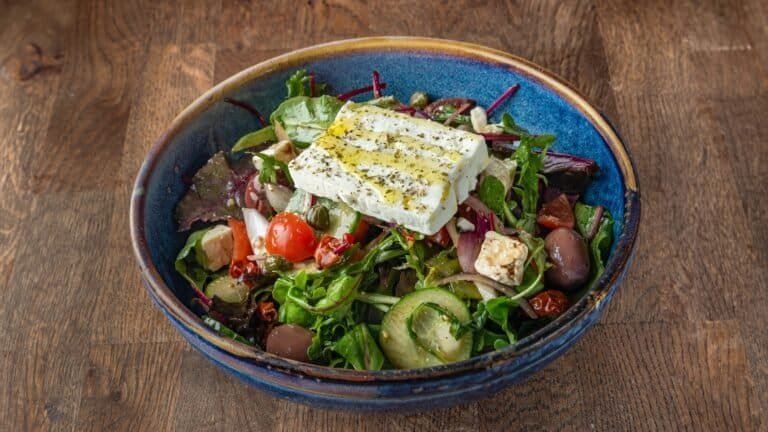
Greek salad

Greek feta salad at Nosta, Cork
Greek feta salad at Nosta

Horiatiki, the Greek village salad: ripe tomatoes, cucumber, red onion, peppers and olives with a thick slice of feta, dressed with olive oil and oregano. No lettuce in the original, though many versions add it.

Mediterranean herbs and spices

Mediterranean cooking relies on fresh herbs, lemon and garlic more than on heat. The classic herbs are oregano, thyme, rosemary, basil, sage, bay, parsley, mint and dill. In the east, spices come in: cumin, paprika, sumac, cinnamon and Turkish red pepper flakes. In North Africa, cooks add saffron, coriander, ginger and harissa.

Mediterranean food at Nosta

At Nosta on Marlborough Street, head chef Niko cooks many of the dishes in this guide every day: the meze plate for two (€23.90) of tzatziki, ezme, aubergine salad and hummus, the Greek feta salad, chargrilled skewers, Turkish pide and wood-fired pizza, and salmon and sea bass from the English Market. See the dinner menu, or order takeaway.
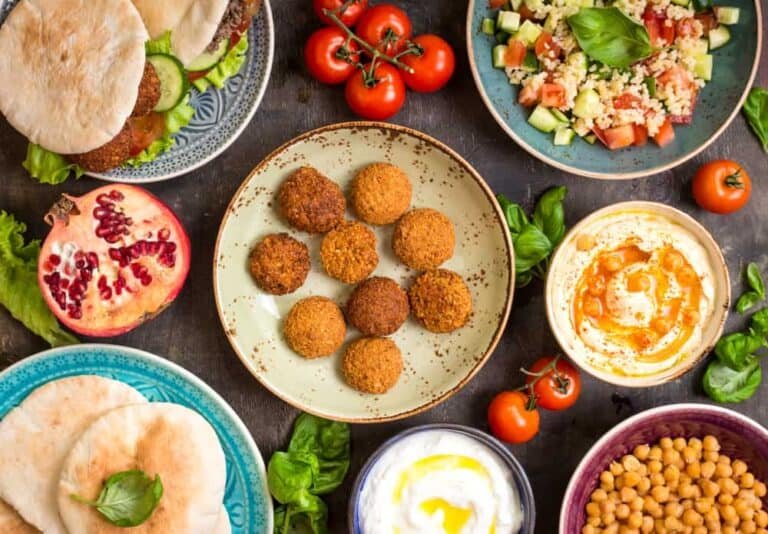
Start with a meze plate

At Nosta
Share the meze plate for two, then choose from the grill, the wood oven or the fish from the English Market. Vegetarian dishes are marked V on the menu.

Questions people ask

What kind of food is Mediterranean food?

The traditional cooking of the countries around the Mediterranean Sea: plenty of vegetables, pulses, grains, olive oil, fish and herbs, with smaller amounts of meat, cheese and yoghurt.

What qualifies as Mediterranean food?

Dishes from the countries bordering the Mediterranean, in southern Europe, the Middle East and North Africa, built on local ingredients such as olive oil, vegetables, pulses, seafood and herbs.

What is the best Mediterranean food?

There is no single best: the region covers more than 20 countries. Pizza, hummus, Greek salad, moussaka and grilled kebabs are among the best known around the world.

What is a typical Mediterranean dinner?

A few shared starters such as dips, salads and bread, then grilled fish or meat, or a vegetable or pulse dish, with olive oil, lemon and herbs, and fruit to finish.

What is a typical Mediterranean lunch?

Often the main meal of the day in southern Europe: a salad or soup, bread, a dish of vegetables, pulses, fish or meat, and fruit.

What is a typical Mediterranean breakfast?

It varies by country: bread with olive oil, tomatoes, olives and cheese in Turkey and Greece, yoghurt with honey, or simply a coffee and a pastry in Italy and Spain.

What are Mediterranean flavours?

Olive oil, lemon, garlic and fresh herbs such as oregano, thyme, rosemary, basil, mint and parsley, with spices such as cumin, paprika and sumac in the east.

What is a Mediterranean herb?

A herb that grows well in the hot, dry Mediterranean climate and is used in its cooking, such as oregano, thyme, rosemary, sage, basil, bay and marjoram.

Is Mediterranean food spicy?

Mostly not hot. It is well seasoned with herbs and spices, but chilli heat is used lightly, apart from some North African and south-eastern Turkish dishes.

Is Mediterranean food the same as Middle Eastern food?

They overlap: Lebanon, Syria, Israel, Turkey and Egypt are both Mediterranean and Middle Eastern, and dishes such as hummus and falafel belong to both. Inland Middle Eastern cooking uses more rice, dried fruit and warm spices.

Is hummus Mediterranean?

Yes. It comes from the eastern Mediterranean, where it has been eaten for centuries; versions of it appear in cookbooks from 13th-century Cairo. Today it is eaten all around the region.
Book your table

The Mediterranean on Marlborough Street

Book a table
Meze, the grill and the wood oven, daily from 12 noon